The 1% Rule: Why 7 Losses Can Halve Your Account (Forex Lesson 12)
Published Nov 6, 2026, 03:00 PM · 2 min read
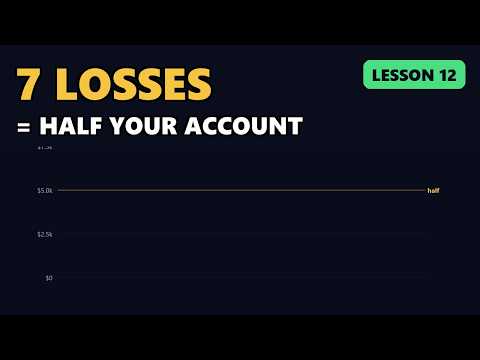
We just published a new video on MCP Labs Forex. It covers The 1% Rule: Why 7 Losses Can Halve Your Account (Forex Lesson 12). Watch it here and read our summary below.
What this video covers
Lesson 12: the 1% rule and position sizing. Why losing streaks are normal, the maths of recovering from a loss, how much to risk per trade, how to calculate your lot size step by step on EURUSD and gold, rounding and the minimum lot, accounts in other currencies, risk across several open trades and correlated pairs, and a real-money account's losing streak.
Lesson 12 of the free course "Forex From Zero to Automated" by MCP Labs Forex.
Next lesson: Lesson 13: Where to put your stop loss
QUIZ: Your account is $5,000. You risk 1%. Your stop on EURUSD is 25 pips. What lot size do you trade? Answer in the comments.
CHAPTERS
0:00 Two traders, one setting
1:06 Why losing streaks happen
1:46 The maths of getting it back
2:18 The 1% rule
2:59 How to calculate your lot size (EURUSD and gold)
4:22 Rounding and the minimum lot
5:22 Several trades at once
6:04 A real-money account example
6:45 Your questions
8:11 Recap, quiz and homework
Sources: Real account: MT5 trade report (Risks tab), live RoboForex account, 9 Oct 2026. Streak chart: simulation. Correlation: Yahoo daily data.
Education, not financial advice. Trading forex, gold and CFDs on margin is high risk; practise on a demo account first. Narration voice is AI-generated.
A product of MCP Labs, created by Tshivhidzo (Moss) Mbedzi.
Run the EA from these videos
Everything shown here runs on Apex Drawdown Zero for MT5 — a selective MT5 Expert Advisor with a stop-loss on every trade and risk-based sizing (V9 has no account-level drawdown halt; V12 does). See more clips on our videos page or subscribe on YouTube.
---
*Any results, returns or win rates mentioned in this video are examples from specific accounts and periods and are not typical or guaranteed. Trading carries substantial risk of loss. Past performance is not indicative of future results — read our full risk disclosure.*